
Last week at our Astrogeology Science Camp, hundreds of children discovered Alfred Wegener’s remarkable story and explored how the supercontinent Pangaea gradually broke apart, eventually forming the continents we know today. We celebrated not just his discovery, but his curiosity, imagination and courage to challenge established scientific thinking. Who knows? Perhaps among those young minds is the next great scientist who will change the way we understand our planet – or even our universe!

Who Was Alfred Wegener?
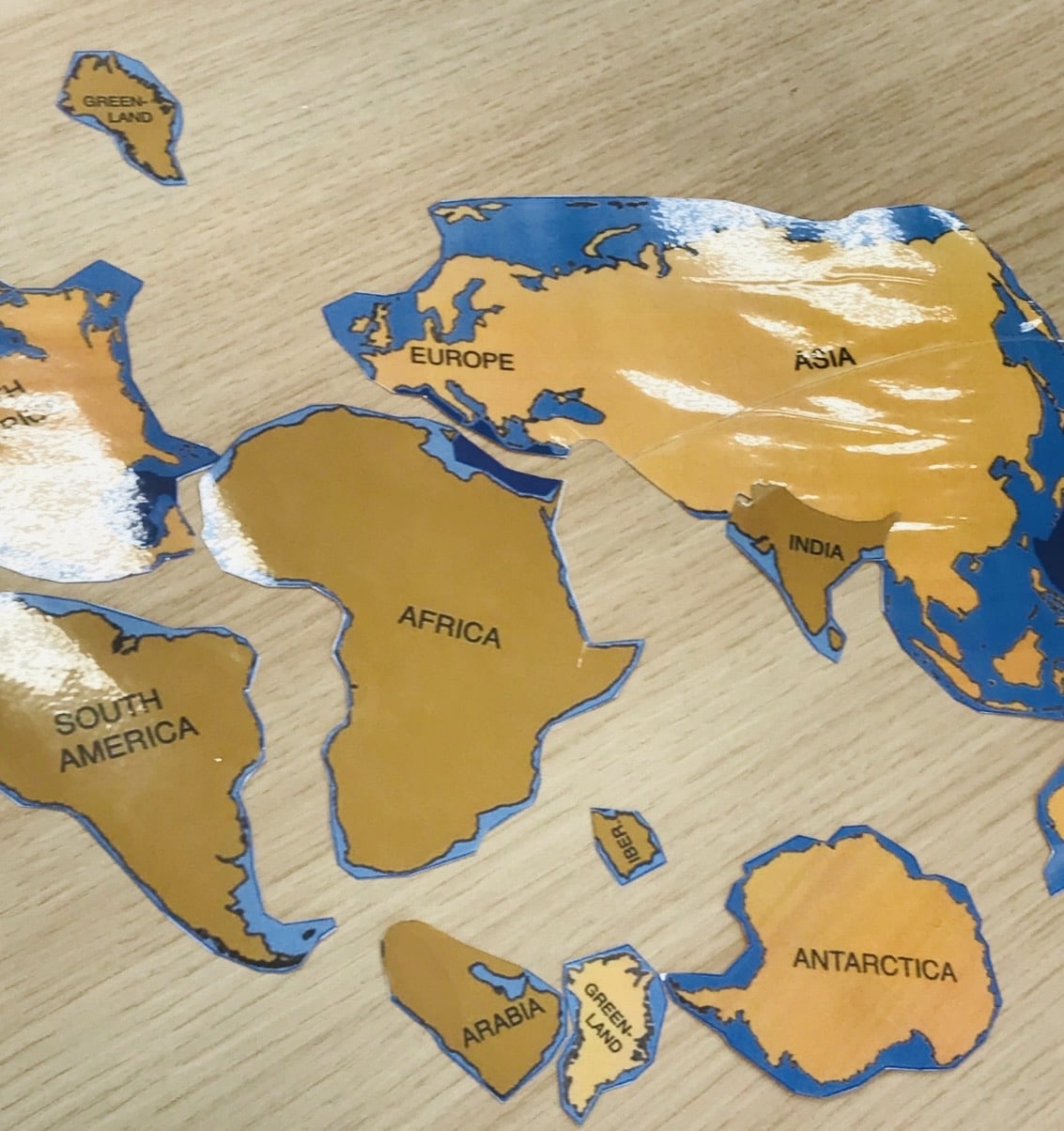
But who was Alfred Wegener, and why is his story so extraordinary? It all started with a map. Looking at the shape of the continents, Wegener noticed something that many people had seen before but perhaps never really stopped to think about: the east coast of South America seemed to fit remarkably well against the west coast of Africa. Almost like two pieces of a giant jigsaw puzzle.
Was it just a coincidence? Wegener didn’t think so. He started digging deeper, looking at fossils, rocks and clues from Earth’s ancient climate. And the more he investigated, the more convinced he became that the continents had once been joined together. In 1912, he presented an idea that was almost impossible for people to imagine at the time: the continents were not fixed. They moved!

Continental Drift and the Supercontinent Pangaea
He called his theory continental drift and suggested that, millions of years ago, all the continents had formed one enormous supercontinent, which he named Pangaea. Over time, this giant landmass broke apart, and its pieces slowly drifted into the positions we know today.
The Idea Nobody Believed
It was a remarkable idea. But there was a problem: most scientists weren’t buying it. They could see some of the evidence, but Wegener couldn’t explain exactly how continents could move across the Earth’s surface. Without that missing piece, many scientists dismissed his theory. Imagine believing you have discovered something extraordinary, gathering evidence to support it, and still having the scientific world tell you that you’re wrong.
Wegener never got to see the moment when things changed. He died in 1930, during an expedition in Greenland, still without the recognition his ideas would eventually receive.
Plate Tectonics: Proof at Last
And here’s where the story gets really interesting…
Years later, new technology allowed scientists to explore the ocean floor. What they found changed everything. They discovered enormous underwater mountain ranges, evidence that new ocean crust was being created and patterns in magnetic rocks that showed the ocean floor was moving.

Suddenly, Wegener’s ideas started to make sense. Scientists finally had an explanation for how the continents could move: the Earth’s outer layer is broken into huge plates that slowly move over the planet’s surface.
By the late 1960s, the theory of plate tectonics had become widely accepted, confirming the central idea that Wegener had fought so hard to defend.
Why We Still Study Wegener Today
Sadly, he wasn’t alive to see it. And perhaps that’s the most moving part of his story. Wegener didn’t have all the answers, and he didn’t get everything right. But he asked the right questions, followed the evidence and wasn’t afraid to challenge what everyone else believed.