Looking for science camps in Kensington for kids aged 5-14? Little House of Science runs hands-on, curriculum-enriching camps right in your neighbourhood. This May half term (26-29 May 2026), children explore the Power of Chemistry through fizzing experiments, polymers, and the Periodic Table. Places fill quickly, so book now to secure your child’s spot.
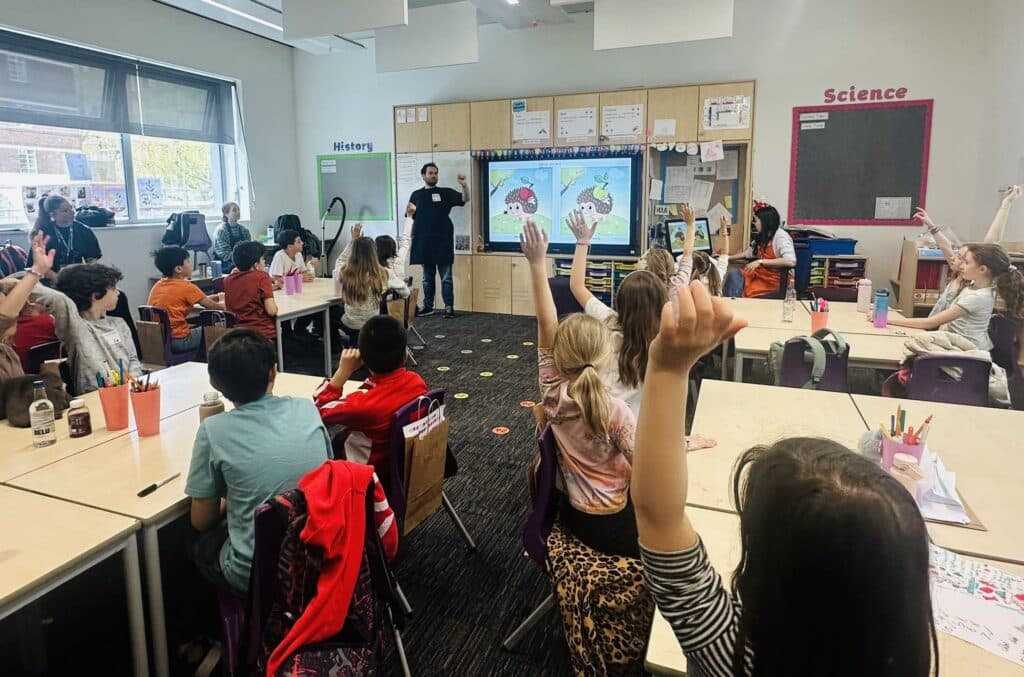
Half term is almost here. If your to-do list includes finding something genuinely enriching for your kids beyond another week of screens and soft play, you’re in the right place. Science camps in Kensington are increasingly popular with local families, and it’s easy to see why. They combine real learning with real fun, and the best ones leave children talking about their experiments for weeks.
Little House of Science was started in 2014 around one core idea: real scientific thinking can begin at a young age when it is hands-on, playful, and rooted in real science. We don’t just deliver activities, we focus on building confidence, curiosity, and genuine agency in children, helping them think, question, and explore the world like young scientists from the very start. This May half term, we’re diving into the Power of Chemistry. Read on to find out what your child will experience, why it matters, and how to book your place.
What Makes a Great Science Camp for Kids Aged 5-14?
A great science camp is not a classroom in disguise. It’s a structured programme where children work through hands-on experiments guided by trained educators, explore topics that go beyond the school curriculum, and leave each day having built something, discovered something, or answered a question they didn’t know they had.
The best camps split children by age so that a 6-year-old isn’t overwhelmed and a 12-year-old isn’t bored. They tie activities to real scientific concepts, not just “cool tricks.” And they make sure every child goes home with a genuine sense of achievement.
Research published in the International Journal of Science and Mathematics Education (2025) found that interactive, hands-on science workshops led to statistically significant improvements in children’s attitudes toward science and increased their motivation to engage with the subject. In other words, the format really does matter.
At Little House of Science, we approach science through multiple lenses: physics, chemistry, biology, geology, history of science, and even art. This interdisciplinary approach helps children see the connections between ideas rather than treating each subject as a separate box.
Why Kensington is a Brilliant Base for Science Education
Kensington is one of the most intellectually rich neighbourhoods in London. The Natural History Museum, the Science Museum, Imperial College London, and the Victoria and Albert Museum all sit within walking distance of each other. It’s a part of the city that takes curiosity seriously.
That cultural backdrop matters. When children attend a science camp in Kensington, they’re learning in a community that values knowledge and exploration. Many families in the area are already investing in enrichment activities like music lessons, sports coaching, and tutoring. A science camp fits right into that ethos.
It also means less time in the car or on the tube. Our May half term camp runs at Marlborough Primary School on Draycott Avenue in Chelsea, SW3. That’s right in the heart of the area, making drop-off and pick-up as simple as possible for families across Kensington and Chelsea. You can find full details about our Kensington and Chelsea location on our website.
What Do Kids Actually Do at Little House of Science Camps?
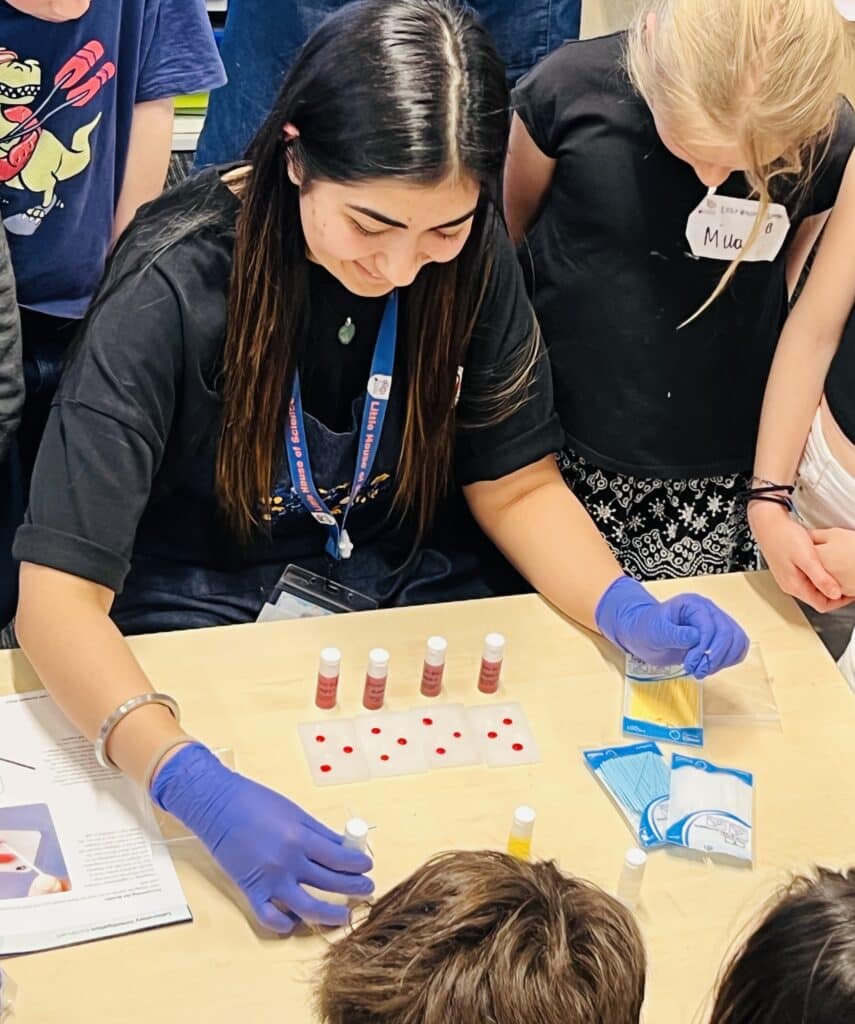
Each day at a Little House of Science camp is a deep dive into a specific theme, packed with experiments, group projects, and real scientific thinking. Children don’t just watch demonstrations: they design, test, make mistakes, and figure out why.
Our May half term (26-29 May 2026) theme is the Power of Chemistry. Over four days, children journey from the basics of the Periodic Table through to polymer science, chemical reactions, crystal formation, the science of recycling, and even a look at radioactivity. It’s chemistry as it should be experienced: messy, surprising, and completely captivating.
Here’s a taste of what the days cover:
- Building an understanding of elements, compounds, and reactions
- Exploring polymers and the materials that make up everyday objects
- Investigating plasma and its properties
- Discovering how atoms connect to form crystals
- Uncovering the science behind recycling and sustainability
Children are grouped by age throughout the camp, so younger children (ages 5-7) work on activities calibrated to their stage of development, while older children (ages 8-14) tackle more complex concepts with greater independence. Our staff-to-child ratio means every child gets proper attention and support.
You can see the full programme for our science holiday camps on our website, including a downloadable daily schedule for May.
How Do Science Camps Benefit Children Long-Term?
Science camps don’t just fill a week in the holidays. They can genuinely shape a child’s relationship with learning, confidence, and future subject choices.
Research published in 2024 by phys.org found that engaging children with science early has measurable long-term effects on GCSE and A-level subject choices, and improves uptake of STEM subjects overall. The earlier that curiosity is sparked, the more likely it is to stick.
A study featured in ECNU Review of Education (2024) showed that hands-on science activities significantly increased children’s motivation scores, with equal benefits for both boys and girls. The study concluded that when children actively participate through seeing, touching, and doing, their motivation for science flourishes.
There are gains in confidence too. Science is Elementary found that hands-on science programmes led to a 20% increase in children’s confidence in their science abilities.
At Little House of Science, we’ve seen this play out over years of running camps. Children who arrive nervous or unsure often leave the week asking when the next camp is. That shift, from “science is hard” to “science is mine,” is what we’re really here for.
The benefits extend beyond science, too. According to researchers at SERC’s Pedagogy in Action library, interdisciplinary learning, which is core to how we teach, fosters critical thinking, perspective-taking, and the ability to connect ideas across different domains. These are life skills, not just science skills.
If your child loves what they discover at camp, our weekend STEM clubs are a brilliant way to keep that momentum going during term time.
Is a Science Camp Right for My Child’s Age?
Yes. Our science camps in Kensington are designed for children aged 5-13, and age-appropriate grouping is central to how we run them.
Younger children (ages 5-8) work through activities that are rich in sensory experience and wonder. They’re doing real science: mixing, building, and observing real reactions. They just don’t need to know the word “polymer” before they can feel excited about stretchy slime. Older children (ages 9-13) go deeper. They start asking “why does this happen?” and we help them find answers grounded in proper scientific understanding.
We’ve found that mixed-age dynamics within those groups actually work really well. Older children gain confidence by explaining concepts to younger ones. Younger children stretch themselves by watching what’s possible. Both groups benefit.
Our camp structure means no child is left struggling and no child is left bored. If your child has attended one of our camps before, they’ll find fresh content every time. Our themes rotate across each holiday, so there’s always something new to explore.
What Kensington and Chelsea Parents Are Looking For
Families in Kensington and Chelsea put real thought into how their children spend the school holidays. A week of enriching activity isn’t just about childcare coverage. It’s about giving children experiences that build their character, deepen their curiosity, and give them something to talk about when they go back to school.
Science camps tick all of those boxes. They offer structure without rigidity, challenge without pressure, and genuine learning without a syllabus.
Many families find that science camps fit naturally alongside their other enrichment choices. If your child already attends one of our after school science clubs during term time, a holiday camp deepens what they’re building week by week. And for children preparing for secondary school transitions, our science tutoring can run alongside camps to give both breadth and depth.
How to Book Your Child’s Place at Our May Half Term Camp
Our May half term camp runs Tuesday 26 to Friday 29 May 2026. The venue is Marlborough Primary School, Draycott Avenue, Chelsea, London SW3 3AP. That’s a short, easy journey from all parts of Kensington and Chelsea.
Places are limited. We cap group sizes deliberately so that every child gets proper attention and the experiments actually work. Once a session is full, it’s full.
To secure your child’s place, head to our May half term science camps booking page and book online. You can also download the full daily programme from that page so you and your child know exactly what to expect each day.
If you have more than one child coming, get in touch with us about sibling arrangements. We work hard to make our camps accessible to families, and we’re always happy to chat through any questions before you book.
Conclusion
Science camps in Kensington don’t have to be hard to find or hard to justify. When the programme is right, the benefits are real: children build confidence, deepen their curiosity, and develop skills that support them long after the week is over.
This May half term, Little House of Science is bringing the Power of Chemistry to Chelsea. Your child will fizz, mix, build, and discover. They’ll learn how atoms form crystals and how polymers end up in the objects they use every day. And they’ll do it with other curious kids, guided by educators who genuinely love what they teach.
Don’t wait to book. Places for our May half term camps (26-29 May) go quickly, and we’d love to have your child with us.
Frequently Asked Questions
What age groups are the science camps in Kensington suitable for? Little House of Science camps are open to children aged 5-13. Children are grouped by age throughout the camp so that activities are always appropriately challenging. Younger children (ages 5-8) focus on sensory-rich, hands-on discovery. Older children (ages 9-13) explore concepts in greater depth and with more scientific rigour.
Where exactly does the May half term camp take place? The May half term camp runs at Marlborough Primary School, Draycott Avenue, London SW3 3AP. This is in the heart of Chelsea, easily accessible from all parts of Kensington and Chelsea. A second location is also available at UCS Senior School, Frognal, Hampstead, NW3 6XH for families north of the park.
What topic will children learn about at the May 2026 camp? The May 2026 theme is the Power of Chemistry: Understanding Elements, Compounds and Reactions. Children will explore the Periodic Table, investigate polymers, experiment with chemical reactions, study the properties of plasma, and discover the science behind crystals and recycling. Each day covers a new strand of chemistry through hands-on experiments and group projects.
How is the camp structured throughout the day? The camp runs Tuesday to Friday, 26-29 May 2026. Each day follows a structured programme with a mix of guided experiments, group discovery activities, and independent projects. Children are supervised throughout by trained educators. You can download the full daily programme from our May half term camps page.
Do you offer any discounts or flexible booking options? We offer friend & sibling discount one child. Booking is done online through our portal, and we encourage early booking as spaces are limited. For any questions about pricing or availability, reach out to us at info@littlehouseofscience.com or call +44 7843 346 557.